User Acquisition Based Case Studies
Fixing Paid Ads That Were Getting Clicks but No Real Users
This is a structured practice case based on a hypothetical situation where paid ads are running, traffic is coming in, but active usage and habit formation are missing.
The setup is simple.
An app is being promoted.
People are clicking the ads.
They are landing on the product page.
But very few become regular users.
Flow in this situation usually looks like this:
Flow in this situation usually looks like this:
Ad shows in feed
→ user taps
→ app page opens
→ confusion starts
→ hesitation builds
→ exit happens
→ no habit
Performance Analysis of Instagram Paid Promotion on a Controlled Budget
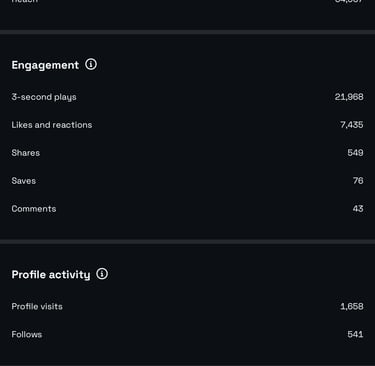
(Based on actual analytics from Instagram. Screenshots of the Insights dashboard and individual ad performance have been attached.)
Context
This case study reviews a 90-day period of paid promotion activity using controlled budgets to study how content performs once paid distribution is introduced. Rather than focusing on aggressive scaling, the intention was to observe user behavior at each stage and understand how exposure translated into engagement and profile activity.
The screenshots attached show the Insights overview as well as individual campaign cards from the ad system, which were used as the primary data source for analysis.



Account-Level Performance
According to the Insights screenshots attached:
Views: 267,475
Reach: 169,891
Interactions (likes, comments, saves): 92,516
Link clicks: 5,151
New followers: 1,515
The relationship between these metrics is important because it indicates that interaction grew in proportion to reach rather than flattening out. This suggests that distribution was not limited to passive exposure and that a significant number of users chose to engage with the content after seeing it.
Budget Conditions
As visible in the individual campaign screenshots, promotions were run with budgets between ₹178 and ₹521. This range enabled efficient testing while limiting risk and maintaining tight feedback cycles on performance.
Limited budgets provide clear signals. Content either generates response or quickly plateaus. This created an environment where content performance could be evaluated without heavy influence from spend.